
Golden Visa UAE 2024-Get Free Consultation Now
Unveiling the Golden Visa UAE: Your Gateway to Long-Term Residency in the Emirates https://accelerateideas.ae/
The United Arab Emirates (UAE) has emerged as a global hub for business, innovation, and luxury living. With its soaring skylines, vibrant culture, and tax-friendly environment, the UAE beckons those seeking a dynamic and prosperous life. To attract and retain talented individuals, the UAE introduced the Golden Visa scheme in 2019. This revolutionary visa program offers a long-term residency option for a diverse range of applicants, making the UAE a truly attractive proposition.
What is the Golden Visa UAE?
The Golden Visa UAE is a long-term residence visa that allows foreign nationals to live, work, or study in the UAE for a period of five or ten years. Unlike traditional residence visas, which are often tied to employment with a specific company, the Golden Visa grants greater freedom and flexibility. Visa holders enjoy a multitude of benefits, including:
- Multi-entry six-month visa: This initial visa allows you to enter the UAE and begin the residency application process.
- Long-term residency: Choose between a five or ten-year residency permit, with the option to renew upon expiry.
- Sponsor exemption: Live and work in the UAE without the need for an employer sponsor.
- Extended stay outside the UAE: Unlike most residency visas, the Golden Visa allows you to remain outside the UAE for extended periods without jeopardizing your residency status.
- Family sponsorship: Sponsor your spouse and dependent children, regardless of their age.
- Domestic help sponsorship: Sponsor an unlimited number of domestic helpers.
Who is Eligible for the Golden Visa UAE?
The Golden Visa UAE caters to a broad spectrum of individuals, opening its doors to those who can contribute significantly to the UAE’s growth and development. The main categories of eligibility include:

golden visa uae processhttps://accelerateideas.ae/
-
Investors:
- Invest a minimum of AED 2 million (approximately USD 545,000) in property in the UAE. The property can be off-plan (under construction) and financed through a mortgage.
- Invest a minimum of AED 10 million (approximately USD 2.7 million) in an approved investment fund within the UAE.
- Establish a company in the UAE with a minimum capital of AED 10 million.
- Become a partner in an existing company with a shareholding of at least AED 10 million.
-
Entrepreneurs:
- Be an owner/founder of a startup with a minimum viable product (MVP) and demonstrably positive impact.
-
Scientists:
- Hold a Ph.D. in a relevant field and have a reputable scientific career with notable achievements.
-
Doctors:
- Be a licensed and qualified medical professional with a specialization in a high-demand field.
-
Exceptional Students and Graduates:
- Be among the top percentile of their graduating class at a prestigious university ranked globally.
-
Humanitarian Pioneers:
- Have a distinguished track record in humanitarian work and exceptional contributions to society.
-
Frontline Heroes:
- Doctors, nurses, and other medical professionals who played a pivotal role in combating COVID-19.
The Application Process for the Golden Visa UAE https://www.facebook.com/accelerateideasfzc
The application process for the Golden Visa UAE can vary depending on your eligibility category. However, some general steps include:
-
Meet the eligibility criteria: Ensure you fall under one of the designated categories and fulfill all the specific requirements.
-
Gather required documents: This typically includes your passport, educational certificates, professional qualifications, bank statements, and proof of investment (if applicable).
-
Apply through the official channels: The application process can be initiated through the website of the Federal Authority for Identity and Citizenship (ICA) or relevant authorities in each emirate.
-
Pay applicable fees: Government fees and medical tests are associated with the application process.
-
Attend medical tests: You and your dependents will be required to undergo mandatory medical tests.
-
Finalize the process: Once your application is approved, you will receive your Golden Visa residency permit.
Benefits of Obtaining the Golden Visa UAE
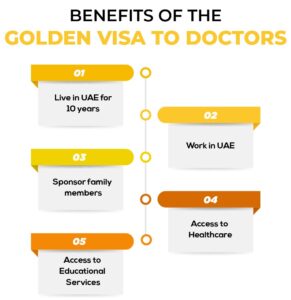
The Golden Visa UAE offers a multitude of advantages for successful individuals and families. Here are some key highlights:
- Stability and Security: A long-term residency visa provides peace of mind and allows you to build a secure future in the UAE.
- Business Opportunities: The Golden Visa fosters a business-friendly environment, allowing you to invest, establish companies, and tap into the UAE’s thriving economy.
- Tax Advantages: The UAE boasts a tax-haven status, with no income tax levied on individuals.
- Lifestyle Advantage: Enjoy a world-class lifestyle with excellent infrastructure, diverse cultural experiences,
- https://www.facebook.com/accelerateideasfzc
Partnering with Accelerate Ideas for a Smooth Golden Visa Journey
Obtaining the Golden Visa UAE can be a rewarding yet complex process. Navigating the eligibility criteria, documentation requirements, and application procedures can be daunting, especially for those unfamiliar with the UAE’s immigration system. To ensure a seamless and stress-free experience, consider partnering with a reputable immigration consultancy like Accelerate Ideas.

Why Choose Accelerate Ideas?
Here’s how Accelerate Ideas can empower you on your Golden Visa UAE journey:
- Expertise and Experience: Accelerate Ideas possesses a team of immigration specialists with in-depth knowledge of the Golden Visa program and its different eligibility categories.
- Personalized Guidance: They provide a comprehensive initial consultation to assess your eligibility and recommend the most suitable visa option based on your unique circumstances.
- Streamlined Process Management: Accelerate Ideas handles the entire application process on your behalf, ensuring all documents are complete and compliant with the latest regulations.
- Efficient Communication: You’ll have access to dedicated advisors who will keep you informed throughout the process and address any questions or concerns you may have.
- Support Beyond Application: Their services often extend beyond application submission, offering assistance with visa renewals and integration into Emirati life.
Taking the Next Step
Are you ready to unlock the doors to a thriving future in the UAE? Contact Accelerate Ideas today for a free consultation and explore the possibilities of obtaining your Golden Visa UAE.
Here’s how to reach Accelerate Ideas (replace with actual contact information):
- Website: https://accelerateideas.ae/
- Phone: +971-527058662
- Email: info@accelerateideas.ae
By partnering with Accelerate Ideas, you can navigate the Golden Visa process with confidence and unlock the potential for a truly enriching life in the United Arab Emirates.
Additional Considerations
This blog post provides a general overview of the Golden Visa UAE. It’s crucial to stay updated on the latest immigration policies and regulations. Accelerate Ideas can be your trusted resource for obtaining the most recent information.
Furthermore, consider these points:
- Investment Options: Explore different investment options within the program, such as property purchase, company formation, or investment funds, to find the one that best aligns with your financial goals and risk tolerance.
- Long-Term Plans: The Golden Visa is a long-term commitment. Ensure your plans align with residing in the UAE for the chosen visa duration.
- Financial Requirements: Meet all financial requirements comfortably to avoid any potential complications during the application process.
With careful planning, expert guidance from Accelerate Ideas, and a clear understanding of your aspirations, the Golden Visa UAE can be your gateway to a fulfilling and prosperous life in the vibrant Emirates.

What are the UAE Ultimate Beneficial Ownership Regulations
The best Cryptocurrency Management License and Registration in UAE (2024-25)
The United Arab Emirates (UAE) has emerged as a progressive hub for Cryptocurrency Management License and Registration in UAE, with regulatory bodies such as the Financial Services Regulatory Authority (FSRA) and the Dubai Financial Services Authority (DFSA) overseeing the licensing and regulation of cryptocurrency management entities. To operate in this space, entities must obtain specific licenses such as the Virtual Asset Service Provider (VASP) License and adhere to rigorous compliance requirements.
The application process for cryptocurrency management licenses involves thorough documentation submission, due diligence checks, and financial assessments to ensure suitability and compliance with regulatory standards. Once licensed, entities must comply with stringent anti-money laundering (AML) and counter-terrorism financing (CTF) regulations, implement measures for customer protection, and uphold market integrity through fair trading practices.
Ongoing compliance monitoring and audits are essential to ensure adherence to regulatory requirements and maintain trust within the cryptocurrency ecosystem. By prioritizing compliance and adopting robust compliance mechanisms, licensed entities can thrive in the dynamic landscape of cryptocurrency regulation in the UAE, contributing to the growth and sustainability of the digital asset industry in the region.
Understanding Cryptocurrency Regulations in the UAE
Cryptocurrency, once viewed with skepticism, has evolved into a global financial phenomenon. As the popularity of digital currencies surges, governments worldwide are crafting regulatory frameworks to govern their use. The United Arab Emirates (UAE), known for its progressive approach to finance, has positioned itself as a hub for cryptocurrency activities. However, understanding the nuances of cryptocurrency management licenses and registrations in the UAE is crucial for individuals and businesses operating in this space.
The Emergence of Cryptocurrency Regulation
In recent years, the UAE has recognized the potential of blockchain technology and cryptocurrencies to revolutionize various sectors, including finance, real estate, and supply chain management. This recognition has prompted the government to establish clear regulatory guidelines to foster innovation while mitigating risks associated with digital assets.
Regulatory Bodies and Authorities Cryptocurrency Management License and Registration in UAE
In the UAE, the regulatory landscape for cryptocurrencies is overseen by multiple authorities, each playing a distinct role in ensuring compliance and fostering a conducive environment for crypto-related activities. The key regulatory bodies include:
Securities and Commodities Authority (SCA)
The SCA regulates securities and commodities markets in the UAE. While cryptocurrencies do not fall under the traditional definition of securities, the SCA has issued guidance on initial coin offerings (ICOs) and digital assets trading.
Financial Services Regulatory Authority (FSRA)
Operating within the Abu Dhabi Global Market (ADGM), the FSRA is responsible for regulating financial services, including cryptocurrencies, within the free zone. It has introduced a comprehensive regulatory framework tailored to the unique characteristics of digital assets.
Dubai Financial Services Authority (DFSA)
Similarly, the DFSA, located in the Dubai International Financial Centre (DIFC), oversees financial services activities, including cryptocurrency exchanges and trading platforms, within its jurisdiction. It has implemented regulations to safeguard investor interests and maintain market integrity.
Types of Cryptocurrency Licenses
In the UAE, entities engaging in cryptocurrency-related activities are required to obtain specific licenses based on the nature of their operations. These licenses include:
Virtual Asset Service Provider (VASP) License
Issued by regulatory authorities such as the FSRA and DFSA, the VASP license allows entities to provide cryptocurrency-related services, including exchange operations, custody solutions, and token issuance platforms.
Crypto Asset Exchange License
Entities operating cryptocurrency exchanges must obtain a Crypto Asset Exchange License, which permits them to facilitate the buying, selling, and trading of digital assets within the UAE.
Digital Asset Management License
For entities offering digital asset management services, such as portfolio management and investment advisory, acquiring a Digital Asset Management License is essential to ensure compliance with regulatory requirements.
Registration Process and Compliance Obligations
Obtaining a cryptocurrency management license in the UAE involves a rigorous registration process designed to assess the entity’s suitability and compliance with regulatory standards. Key steps in the registration process include:
Documentation Submission
Entities seeking licensure must submit comprehensive documentation, including business plans, financial statements, and compliance manuals, detailing their proposed cryptocurrency activities and operational framework.
Due Diligence and Background Checks
Regulatory authorities conduct thorough due diligence checks on applicants, including background checks on key personnel and shareholders, to ensure integrity and adherence to anti-money laundering (AML) and counter-terrorism financing (CTF) regulations.
Compliance with Regulatory Requirements
Applicants must demonstrate compliance with a range of regulatory requirements, including capital adequacy, cybersecurity measures, and customer protection protocols, to mitigate risks and safeguard investor interests.
Application Process for Cryptocurrency Management Licenses in the UAE
Understanding the Application Requirements
Acquiring a cryptocurrency management license in the UAE entails a comprehensive application process governed by regulatory authorities such as the FSRA and DFSA. Before initiating the application process, entities must familiarize themselves with the specific requirements and guidelines outlined by the respective regulatory bodies.
Initial Consultation and Pre-Application Stage
Prior to submitting a formal application for a cryptocurrency management license, entities are encouraged to engage in an initial consultation with regulatory authorities. During this stage, applicants can seek clarification on regulatory requirements, discuss their proposed business activities, and address any potential concerns or inquiries raised by the regulatory authorities.
Documentation Preparation and Submission
The application process for a cryptocurrency management license involves the preparation and submission of extensive documentation to demonstrate the entity’s suitability and compliance with regulatory standards. Key documents typically required during the application process include:
Business Plan
Entities must develop a comprehensive business plan outlining their proposed cryptocurrency activities, operational framework, target market, and growth strategies. The business plan should also include financial projections and risk management strategies.
Compliance Manuals
Applicants are required to develop compliance manuals detailing their policies, procedures, and internal controls for ensuring compliance with regulatory requirements, including AML/CFT measures, customer due diligence (CDD), and transaction monitoring.
Organizational Structure and Governance Framework
Entities must provide details of their organizational structure, including information on key personnel, shareholders, and board members. Additionally, applicants must outline their governance framework and mechanisms for oversight and accountability.
Due Diligence and Background Checks
As part of the application process, regulatory authorities conduct thorough due diligence checks on applicants and key stakeholders to assess their integrity, reputation, and suitability for licensure. Background checks may include verifying qualifications, conducting interviews, and scrutinizing past business dealings.
Financial and Operational Requirements
Entities seeking a cryptocurrency management license must demonstrate financial stability and adequacy of resources to support their proposed activities. Regulatory authorities may impose minimum capital requirements and conduct financial assessments to ensure entities have the necessary funds to operate effectively.
Compliance Review and Assessment
Once the application and documentation have been submitted, regulatory authorities conduct a comprehensive review and assessment to evaluate the entity’s compliance with regulatory requirements. This process may involve onsite inspections, interviews with key personnel, and analysis of documentation submitted.
Regulatory Considerations and Ongoing Compliance Obligations
Regulatory Framework Overview
After obtaining a cryptocurrency management license in the UAE, entities must adhere to a robust regulatory framework established by regulatory authorities such as the FSRA and DFSA. The regulatory framework aims to maintain market integrity, protect investor interests, and mitigate risks associated with cryptocurrency activities.
Compliance with Anti-Money Laundering (AML) and Counter-Terrorism Financing (CTF) Regulations
Licensed cryptocurrency entities in the UAE are subject to stringent AML/CFT regulations aimed at preventing illicit activities such as money laundering and terrorism financing. Entities must implement robust AML/CFT measures, including customer due diligence (CDD), transaction monitoring, and suspicious activity reporting, to detect and deter financial crimes.
Customer Protection and Investor Safeguards
To enhance customer protection and investor confidence, licensed cryptocurrency entities are required to implement measures to safeguard client assets, maintain transparency in their operations, and provide adequate disclosures regarding risks associated with cryptocurrency investments. Additionally, entities must adhere to best practices for cybersecurity to protect client data and prevent unauthorized access to funds.
Market Integrity and Fair Trading Practices
Regulatory authorities in the UAE emphasize the importance of maintaining market integrity and fostering fair trading practices within the cryptocurrency ecosystem. Licensed entities must adhere to strict standards of conduct, including fair pricing, transparent order execution, and prohibition of market manipulation, to ensure a level playing field for all market participants.
Regulatory Reporting and Recordkeeping Obligations
Licensed cryptocurrency entities are required to maintain accurate and up-to-date records of their activities, transactions, and client interactions. Additionally, entities must submit regular reports to regulatory authorities, detailing their compliance with regulatory requirements and addressing any significant developments or incidents that may impact their operations.
Ongoing Compliance Monitoring and Audits
To ensure ongoing compliance with regulatory requirements, licensed cryptocurrency entities are subject to regular monitoring and audits by regulatory authorities. Compliance officers within these entities are responsible for conducting internal reviews, assessing adherence to regulatory standards, and implementing corrective measures as necessary to address any deficiencies or non-compliance issues.
Conclusion
Navigating the regulatory landscape for cryptocurrency management in the UAE requires a thorough understanding of regulatory requirements and ongoing compliance obligations. By adhering to AML/CFT regulations, prioritizing customer protection and market integrity, and maintaining robust compliance monitoring mechanisms, licensed entities can build trust, mitigate risks, and contribute to the growth and sustainability of the cryptocurrency ecosystem in the UAE.
In summary, obtaining a cryptocurrency management license in the UAE is just the first step in a journey that requires ongoing commitment to regulatory compliance and adherence to best practices. By prioritizing compliance and upholding high standards of integrity, licensed entities can thrive in the dynamic and evolving landscape of cryptocurrency regulation in the UAE.
FAQs
Which regulatory bodies oversee cryptocurrency management licenses in the UAE?
Regulatory bodies such as the Financial Services Regulatory Authority (FSRA) and the Dubai Financial Services Authority (DFSA) oversee cryptocurrency management licenses in the UAE.
What types of licenses are available for cryptocurrency management in the UAE?
Types of licenses include the Virtual Asset Service Provider (VASP) License, Crypto Asset Exchange License, and Digital Asset Management License.
What are the application requirements for a cryptocurrency management license in the UAE?
Application requirements typically include submitting a business plan, compliance manuals, organizational structure details, and undergoing due diligence checks.
How long does it take to obtain a cryptocurrency management license in the UAE?
The timeframe for obtaining a cryptocurrency management license varies but can take several months due to the rigorous application process and regulatory scrutiny.
What are the capital requirements for obtaining a cryptocurrency management license in the UAE?
Capital requirements vary depending on the type of license and regulatory authority but may range from tens of thousands to millions of dollars.
Can foreign entities apply for cryptocurrency management licenses in the UAE?
Yes, foreign entities can apply for cryptocurrency management licenses in the UAE, but they must meet the same regulatory requirements as local entities.
What compliance measures are required for licensed cryptocurrency entities in the UAE?
Licensed cryptocurrency entities must comply with anti-money laundering (AML) and counter-terrorism financing (CTF) regulations, implement customer protection measures, and uphold market integrity standards.
Are there any restrictions on the types of cryptocurrency activities permitted under a license in the UAE?
Regulatory authorities may impose restrictions on certain cryptocurrency activities to ensure compliance with local laws and regulations.
What are the ongoing compliance obligations for licensed cryptocurrency entities in the UAE?
Ongoing compliance obligations include regular reporting to regulatory authorities, maintaining accurate records, conducting internal audits, and staying updated on regulatory developments.

E-Commerce Business Set-up In the UAE
In the bustling e-commerce landscape of the E-Commerce Business Set-up In the UAE, where online sales are projected to reach $27.1 billion by 2022, establishing a successful online business requires careful navigation of various challenges and strategic implementation of key tactics. Understanding the legal framework, selecting the right business structure, and securing necessary permits and licenses are foundational steps in setting up an e-commerce venture. Additionally, building a user-friendly website, implementing robust payment gateways, and developing a comprehensive marketing strategy are essential for attracting customers and driving sales.
However, operational challenges such as logistical hurdles and data protection compliance must be addressed effectively to ensure seamless operations and maintain customer trust. Leveraging data analytics for informed decision-making and fostering customer loyalty through reliable support services and transparent policies are crucial for long-term success. Furthermore, embracing omnichannel retailing and prioritizing scalability are key strategies for expanding reach and sustaining growth in the dynamic e-commerce market of the UAE. By adopting a holistic approach that combines innovation, adaptability, and strategic partnerships, e-commerce entrepreneurs can capitalize on the abundant opportunities in the UAE’s digital economy and establish thriving online businesses poised for sustainable success.
Understanding the E-Commerce Business Set-up In the UAE
Introduction to E-Commerce in the UAE
The United Arab Emirates (UAE) stands at the forefront of technological advancement and economic growth in the Middle East. In recent years, the country has witnessed a significant surge in e-commerce activities, driven by a combination of factors such as high internet penetration, a tech-savvy population, and a booming digital economy.
Overview of the E-Commerce Market
The e-commerce market in the UAE has been experiencing rapid growth, with online sales expected to reach $27.1 billion by 2022, according to a report by BMI Research. This growth can be attributed to the increasing adoption of smartphones and the internet, coupled with changing consumer preferences towards convenience and accessibility.
Key Players in the UAE E-Commerce Sector
Several key players dominate the e-commerce landscape in the UAE, including Amazon UAE, Souq.com (now owned by Amazon), Noon, and Namshi, among others. These platforms offer a wide range of products and services, catering to the diverse needs of consumers in the region.
Regulatory Environment
The UAE government has been proactive in creating a conducive environment for e-commerce growth. In 2016, the country enacted the E-commerce Law, which regulates online transactions and provides guidelines for e-commerce businesses operating in the UAE. Additionally, the introduction of the Value Added Tax (VAT) in 2018 has further streamlined the taxation system for online transactions.
Consumer Behavior and Trends
Understanding consumer behavior is crucial for e-commerce businesses looking to establish a presence in the UAE. The majority of consumers in the UAE prefer to shop online due to factors such as convenience, competitive pricing, and a wide range of product choices. Moreover, the rise of digital payment solutions has made online shopping more accessible to a larger segment of the population.
Opportunities and Challenges
While the e-commerce sector in the UAE presents lucrative opportunities for businesses, it also comes with its fair share of challenges. One of the major challenges faced by e-commerce companies is the intense competition in the market, with new players entering the fray regularly. Additionally, logistical constraints and last-mile delivery issues pose operational challenges for e-commerce businesses in the region.
Steps to Set Up an E-Commerce Business in the UAE
Understanding Legal Requirements
Before diving into the e-commerce market in the UAE, it’s essential to understand the legal requirements and regulations governing online businesses. The first step is to register your company with the Department of Economic Development (DED) in the respective emirate where you plan to operate. This involves obtaining a trade license and fulfilling other legal formalities as per the guidelines laid out by the authorities.
Choose the Right Business Structure
Selecting the appropriate business structure is crucial for the success of your e-commerce venture in the UAE. Options include setting up a mainland company, establishing a free zone entity, or operating as an offshore company. Each structure has its own set of advantages and limitations, so it’s essential to carefully evaluate your business needs and choose the most suitable option.
Secure Necessary Permits and Licenses
In addition to obtaining a trade license, e-commerce businesses in the UAE may need to secure specific permits and licenses depending on the nature of their operations. For instance, if your e-commerce platform deals with food products, you’ll need to obtain a food trading license from the relevant authorities. Similarly, businesses selling electronics or medical devices may require additional certifications and approvals.
Establish Payment Gateways
Setting up secure and reliable payment gateways is critical for ensuring smooth transactions on your e-commerce platform. Partnering with reputable payment service providers (PSPs) that offer secure online payment solutions will help build trust among your customers and streamline the payment process. Popular payment gateways in the UAE include Telr, PayTabs, and Checkout.com.
Build a User-Friendly Website
Your website serves as the face of your e-commerce business, so it’s essential to invest in building a user-friendly and visually appealing online platform. Hire experienced web developers and designers to create a responsive website that offers seamless navigation, easy product search functionality, and secure checkout options. Incorporating features such as customer reviews, product recommendations, and personalized shopping experiences can enhance user engagement and drive sales.
Develop a Marketing Strategy
In a competitive e-commerce landscape, effective marketing is key to attracting customers and generating sales. Develop a comprehensive marketing strategy that encompasses various digital channels such as social media, search engine optimization (SEO), email marketing, and influencer partnerships. Leveraging data analytics tools to track and analyze customer behavior will help refine your marketing efforts and optimize return on investment (ROI).
Ensure Compliance with Data Protection Laws
As e-commerce businesses deal with sensitive customer data, ensuring compliance with data protection laws is paramount. Familiarize yourself with regulations such as the General Data Protection Regulation (GDPR) and the UAE’s Data Protection Law to safeguard customer privacy and avoid legal repercussions. Implement robust data security measures, including encryption protocols, firewalls, and regular security audits, to protect against cyber threats and data breaches.
Navigating Operational Challenges and Scaling Your E-Commerce Business
Overcoming Logistical Hurdles
One of the most significant challenges faced by e-commerce businesses in the UAE is navigating the complex logistical landscape. With a diverse customer base spread across different emirates, ensuring timely and cost-effective delivery can be challenging. To overcome this hurdle, consider partnering with reliable third-party logistics (3PL) providers that offer nationwide coverage and efficient last-mile delivery solutions. Additionally, leveraging technology such as route optimization software and inventory management systems can streamline logistical operations and improve overall efficiency.
Embracing Omnichannel Retailing
In today’s digital age, consumers expect a seamless shopping experience across multiple channels, including online platforms, mobile apps, social media, and physical stores. Embracing omnichannel retailing allows e-commerce businesses to meet customer demands and enhance brand engagement. Invest in integrating your online storefront with brick-and-mortar stores, enabling customers to browse products online and make purchases in-store or vice versa. Implementing click-and-collect services and offering flexible delivery options further enhances the omnichannel experience for customers.
Leveraging Data Analytics for Business Growth
Data analytics plays a pivotal role in driving business growth and informed decision-making for e-commerce companies. By harnessing the power of data analytics tools and techniques, businesses can gain valuable insights into customer behavior, market trends, and sales performance. Analyze customer demographics, purchasing patterns, and website traffic to identify opportunities for product optimization, targeted marketing campaigns, and personalized customer experiences. Continuously monitor key performance indicators (KPIs) and iterate your strategies based on data-driven insights to stay competitive in the dynamic e-commerce landscape.
Fostering Customer Trust and Loyalty
Building trust and fostering customer loyalty are essential for long-term success in the e-commerce sector. With increasing competition and rising consumer expectations, businesses must prioritize customer satisfaction and transparency in their operations. Offer reliable customer support services via multiple channels, including live chat, email, and phone, to address inquiries and resolve issues promptly. Implement a hassle-free return and exchange policy to instill confidence in your customers and encourage repeat purchases. Moreover, leveraging social proof through customer reviews, testimonials, and user-generated content can enhance brand credibility and foster a loyal customer base.
Scaling Your E-Commerce Business
As your e-commerce business grows, scalability becomes a critical factor in sustaining momentum and capitalizing on new opportunities. Invest in scalable technology infrastructure that can accommodate increased website traffic, transaction volume, and data processing capabilities. Continuously optimize your supply chain and operational processes to meet growing demand and maintain high levels of customer satisfaction. Explore expansion opportunities into new market segments, product categories, or geographic regions to diversify revenue streams and fuel further growth. Additionally, nurture strategic partnerships with suppliers, distributors, and other stakeholders to support your expansion efforts and unlock synergistic opportunities for mutual benefit.
Conclusion
In conclusion, the e-commerce landscape in the United Arab Emirates (UAE) presents a wealth of opportunities for aspiring entrepreneurs willing to navigate its complexities and challenges. With the market projected to reach $27.1 billion by 2022, setting up a successful online business requires careful planning, adherence to legal requirements, and strategic execution of key tactics.
From understanding the regulatory environment and selecting the right business structure to embracing omnichannel retailing and prioritizing scalability, e-commerce ventures in the UAE must adopt a multifaceted approach to thrive in the competitive market. By overcoming logistical hurdles, leveraging data analytics for informed decision-making, and fostering customer trust and loyalty, businesses can establish a strong foothold in the digital marketplace and position themselves for sustainable growth.
As the UAE continues to emerge as a hub for e-commerce innovation and investment, entrepreneurs must remain agile, adaptable, and forward-thinking to capitalize on evolving consumer trends and market dynamics. With the right strategy, dedication, and resilience, e-commerce ventures in the UAE can unlock boundless opportunities for success and contribute to the vibrant digital economy of the region.
FAQs
What is the process for obtaining a trade license for an e-commerce business in the UAE?
The process for obtaining a trade license for an e-commerce business in the UAE involves submitting the necessary documents, including passport copies, business plan, and proof of address, to the Department of Economic Development (DED) or the relevant free zone authority. Once approved, you will receive your trade license, enabling you to legally operate your e-commerce business.
What are the different business structures available for e-commerce businesses in the UAE?
E-commerce businesses in the UAE can choose from various business structures, including mainland companies, free zone entities, and offshore companies. Each structure has its own set of advantages and limitations, so it's essential to carefully evaluate your business needs before making a decision.
Do e-commerce businesses in the UAE need to obtain specific permits and licenses?
Depending on the nature of their operations, e-commerce businesses in the UAE may need to obtain specific permits and licenses. For instance, businesses dealing with food products may require a food trading license, while those selling electronics or medical devices may need additional certifications and approvals.
How can e-commerce businesses in the UAE ensure secure online transactions?
E-commerce businesses in the UAE can ensure secure online transactions by partnering with reputable payment service providers (PSPs) that offer secure payment gateways. Implementing encryption protocols, firewalls, and regular security audits can also help protect customer data and prevent fraud.
What are some popular payment gateways used by e-commerce businesses in the UAE?
Popular payment gateways used by e-commerce businesses in the UAE include Telr, PayTabs, and Checkout.com, among others. These payment service providers offer secure online payment solutions and support multiple payment methods to cater to diverse customer preferences.
How can e-commerce businesses in the UAE optimize their website for better user experience?
E-commerce businesses in the UAE can optimize their website for better user experience by investing in responsive web design, easy navigation, and secure checkout options. Incorporating features such as customer reviews, product recommendations, and personalized shopping experiences can also enhance user engagement and drive sales.
What marketing strategies are effective for e-commerce businesses in the UAE?
Effective marketing strategies for e-commerce businesses in the UAE include social media marketing, search engine optimization (SEO), email marketing, and influencer partnerships. Leveraging data analytics tools to track and analyze customer behavior can help refine marketing efforts and optimize return on investment (ROI).
How can e-commerce businesses in the UAE ensure compliance with data protection laws?
E-commerce businesses in the UAE can ensure compliance with data protection laws by familiarizing themselves with regulations such as the General Data Protection Regulation (GDPR) and the UAE's Data Protection Law. Implementing robust data security measures, including encryption protocols and regular security audits, is essential for protecting customer privacy and avoiding legal repercussions.
What are some logistical challenges faced by e-commerce businesses in the UAE?
Some logistical challenges faced by e-commerce businesses in the UAE include ensuring timely and cost-effective delivery, especially with a diverse customer base spread across different emirates. Partnering with reliable third-party logistics (3PL) providers and leveraging technology such as route optimization software can help overcome these challenges.